 X
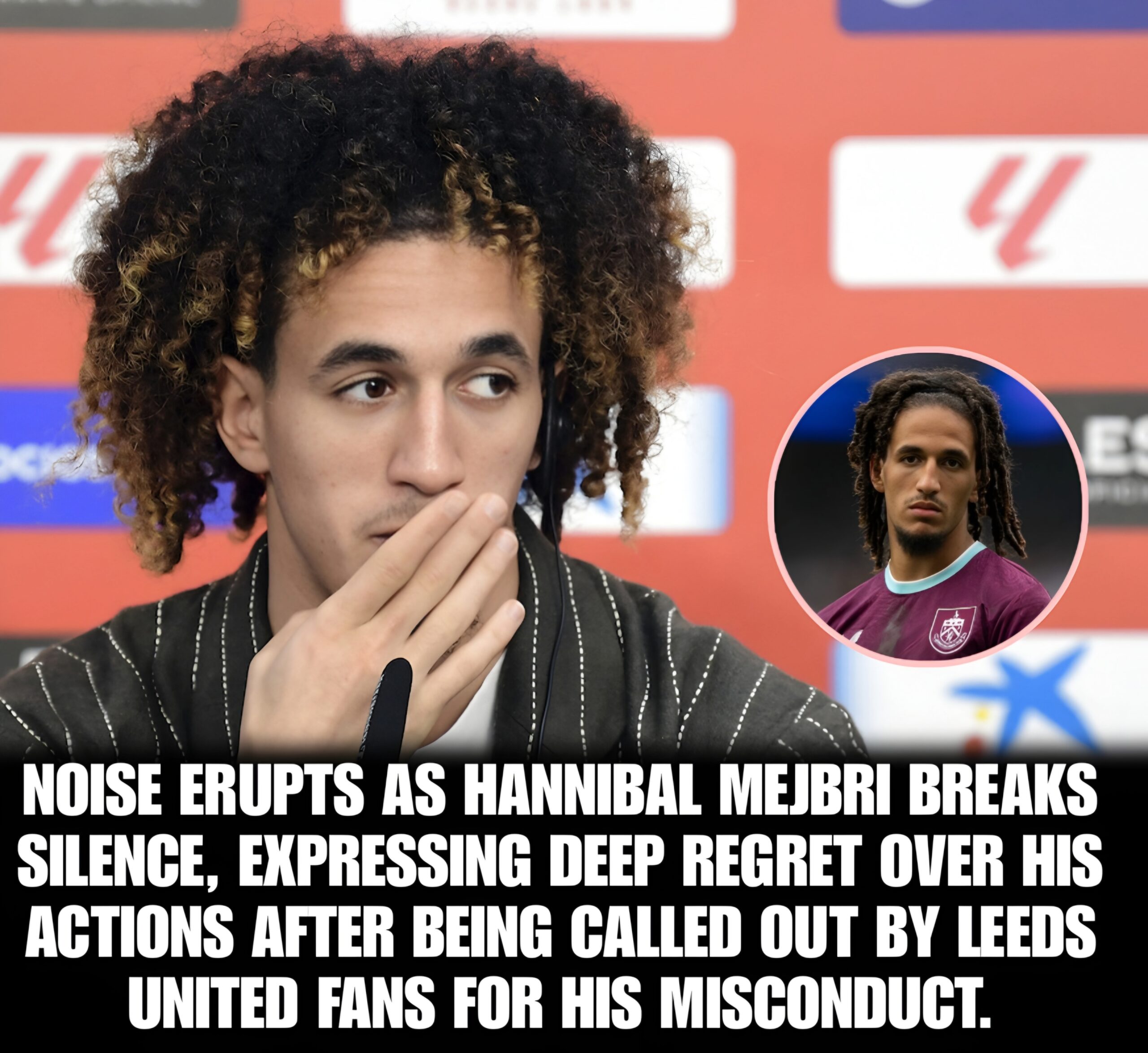
XHannibal Mejbri has finally broken his silence following days of heavy criticism and public backlash from Leeds United fans after his controversial misconduct during the recent clash. The Burnley midfielder, who was charged by the Football Association for allegedly spitting toward a section of Leeds supporters, has now expressed sincere regret and remorse for his actions, admitting that the entire ordeal has taken a serious emotional toll on him.
In what has become one of the most talked-about incidents in English football this week, Mejbri’s apology marks a significant shift in tone. The Tunisian international had previously stayed quiet amid the storm of reactions that followed the post-match reports, where thousands of Leeds fans took to social media demanding accountability and respect. The footage of the altercation went viral, fueling outrage and drawing condemnation from pundits, journalists, and fellow professionals who described the act as “completely unacceptable in the modern game.”
The midfielder has now come forward with words that seem to reflect a deeper self-reflection. “I accept my mistake,” he said in an interview released through club channels. “What I did was wrong, and I promise it won’t happen again. This entire situation has weighed heavily on me, and I’ve had time to think about the kind of example I want to set as a player.”
These words have resonated across the football community, with some acknowledging his courage to admit fault, while others believe the damage may already be done. Leeds fans, in particular, have remained divided. A portion of the fanbase insists that the apology is “too little, too late,” while others have accepted the gesture as a sign of maturity and growth.
The FA investigation into the incident remains ongoing, and Mejbri could still face further sanctions if found guilty of misconduct. Burnley’s management, on the other hand, has stood by the player, emphasizing that while the act itself cannot be excused, the midfielder has demonstrated “a genuine desire to learn from this and move forward.”
On social media, reactions have continued to pour in. Supporters of both clubs have exchanged heated comments, turning the situation into a trending topic across X (formerly Twitter), Instagram, and TikTok. Clips of Mejbri’s apology statement have been viewed millions of times, with fans dissecting every word, tone, and gesture. Some commentators suggested that the emotional strain of the Premier League’s relentless pressure may have played a role in his impulsive behavior, while others insist that professionalism must prevail, regardless of circumstances.
What makes this story particularly dramatic is how quickly it spiraled. Just a week ago, Mejbri was being praised for his energy and aggression on the pitch — traits that once made him a fan favorite at Manchester United’s youth level and during his early Burnley appearances. Now, he finds himself at the center of a reputational crisis, his name trending not for goals or assists but for controversy. The fallout has shown how fragile football fame can be in the digital age, where one misstep can overshadow months of hard work.
Inside Burnley’s camp, sources report that teammates have rallied around him, urging him to stay focused on football and to channel the negativity into performance. “Everyone makes mistakes,” one teammate reportedly said. “What matters is how you respond, and Hannibal is showing he’s ready to put things right.”
For Leeds United supporters, however, the memory of that night remains bitter. Many fans have spoken about the emotional sting of feeling disrespected, especially after a hard-fought game. “We want players to play with passion, not disrespect,” one fan told Yorkshire Evening Post. “It’s not about rivalry anymore — it’s about respect.”
Football pundits have also weighed in, with some suggesting that the FA should use this case as an example to promote stricter boundaries around player-fan interactions. Former professionals like Jermaine Jenas and Micah Richards discussed the issue on talk shows, stressing the importance of maintaining composure, especially when provoked. “In football, emotions run high,” Richards said. “But no matter the situation, you can’t let frustration turn into something you’ll regret.”
Despite the controversy, Mejbri’s apology has opened the door for redemption. His willingness to face the public eye, admit wrongdoing, and take responsibility has been seen by some as the first step toward rebuilding his image. Public forgiveness in football often depends not just on words but on consistent actions afterward — disciplined performances, good sportsmanship, and a visible commitment to the values of the game.
As Burnley prepares for their upcoming fixtures, all eyes will be on Mejbri. The question now is whether he can handle the pressure, win back the fans, and prove that his remorse is genuine. In the unforgiving world of professional football, redemption stories are never easy, but they are possible — and this might be his defining moment to turn the narrative around.
In the end, Hannibal Mejbri’s situation serves as a reminder of how quickly emotions can spiral in the heat of competition and how every action, however small, can have lasting consequences. His words — “This has weighed heavily on me” — speak not only to his personal guilt but also to the growing awareness that footballers today are more scrutinized than ever. The challenge for Mejbri is clear: to show through humility and discipline that lessons have been learned. For Leeds fans, the pain may take longer to heal, but time — and sincere effort — might eventually bring closure to one of the season’s most heated moments.

 admin
admin Nazman123
 Empiresam9
 lukman