 X
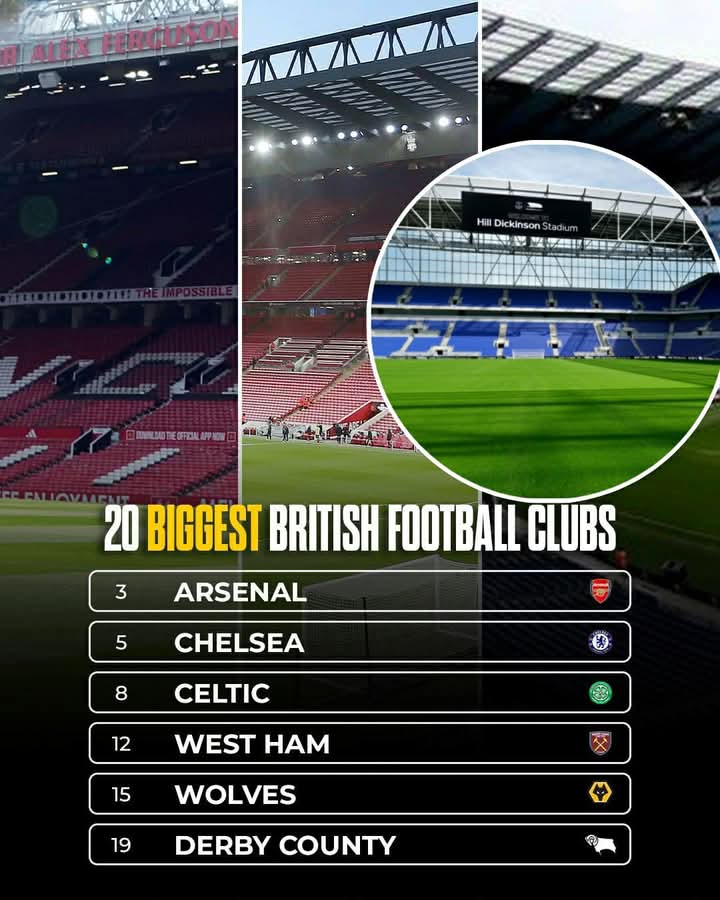
XEverton FC has sparked massive conversation across the football world after being officially placed among the biggest and most influential clubs in the entire history of British football. This unexpected rise in their historical rankings has set social media on fire, triggered heated debates among supporters, and sent shockwaves throughout the Premier League community. What was initially seen as a simple ranking update has now turned into one of the most talked-about topics of the week, with fans, pundits, and rival supporters all weighing in on the surprising development.
For decades, Everton has been recognized as a traditional English club with a rich heritage, passionate supporters, and a deep football culture rooted in Merseyside. However, seeing them secure such a high and “shock spot” on a list that combines influence, longevity, trophies, league records, and overall contribution to British football has caught many people off guard. Some believe the recognition is long overdue, while others argue that Everton has been underrated for years and finally received the acknowledgment they deserve. But regardless of which side fans fall on, one thing is clear — this ranking has become a major talking point in the football world.
Everton’s legacy stretches back well over a century, and throughout that time, they’ve played a defining role in shaping British football. They were founding members of the Football League in 1888 and have spent the majority of their history competing in the top division, something only a handful of clubs can boast. Their consistency, presence, and ability to survive multiple eras of football evolution are part of what placed them so high on the rankings. Analysts pointed to the club’s rich trophy cabinet, legendary players, iconic Goodison Park atmosphere, and their historical rivalries as strong factors that contributed to their elevated position.
The shock comes from the fact that Everton has recently struggled on the pitch, facing relegation battles, point deductions, instability, and long-term rebuilding challenges. Yet despite modern hardships, the club’s historical weight has proven enormous. Many football historians argue that modern form should not erase decades of influence, success, and contribution. That message has resonated strongly with long-time Evertonians, who feel proud that the club’s true identity and legacy have been recognized despite years of setbacks.
On social media, Everton fans celebrated passionately. Many wrote emotional posts emphasizing that their history should never be forgotten, no matter the current league table. Others highlighted unforgettable legends who shaped the club’s past — players who lifted trophies, broke records, and left their mark on English football culture. In contrast, supporters of rival clubs expressed a mixture of surprise, confusion, and debate. Some claimed the ranking was justified because Everton’s achievements stretch further than many realize. Others insisted that the club’s recent struggles should have pushed them lower. This clash of opinions is exactly what helped the topic trend so fast.
Football pundits also joined the conversation, breaking down the criteria used to measure “biggest clubs” in British history. They noted that the ranking was not only about recent success but about long-term impact — including league titles, FA Cup triumphs, overall consistency, stadium culture, fanbase size, and influence on the evolution of football in Britain. When seen through that lens, Everton’s placement became easier to understand. The club has nine league titles, five FA Cups, a European trophy, and decades of top-flight presence. These accomplishments are historically massive, even if younger fans are more familiar with the recent Premier League era.
The trending conversation also raised a deeper discussion about how football culture often forgets the achievements of older generations. Many younger fans who didn’t witness Everton’s prime years were shocked to discover how dominant the club once was, while older supporters proudly reminded everyone that football did not begin in the 2000s. This generational clash added another layer of intensity to the debates online.
Beyond the arguments, Everton’s unexpected ranking has given the club a boost in morale at a time when supporters needed positivity. For fans who have endured tough seasons, financial challenges, managerial changes, and uncertainty about their future stadium transition, this recognition serves as a reminder of the club’s identity — a giant of English football with a heritage that cannot be erased.
As the conversation continues to spread, the trending headlines make one thing certain: Everton may not always dominate the league table, but their historical impact is undeniable. Their presence in British football is deeply rooted, their story is rich, and their influence stretches far beyond recent struggles. Securing a shock spot on such a prestigious ranking has revived pride, stirred emotions, and reminded everyone why Everton remains one of the most respected names in the sport.
In the end, this ranking has done more than place Everton high on a list — it has reignited conversations about football history, legacy, respect, and recognition. And for Evertonians everywhere, it is a moment worth celebrating, discussing, and defending with passion.


 admin
admin


 Wagwanvibes
 Sadiqashraf001